March 17, 2025 · 5 min read
I Expected Inflammation. I Got a Lesson in the Cell's Skeleton.
The research went somewhere I did not see coming, and it was the most interesting detour I have taken.

I went into this reading expecting a story about swelling and repair. I came out with a new interest in a protein called actin, which is basically part of the cell's skeleton.
The compound comes from a protein your body makes that grabs onto actin and helps cells build and rebuild their insides. That matters because cells have to physically move to get where they are needed, and moving requires a frame to push against.
What I love about this kind of reading is when a compound turns out to work on something I had never thought about. A cell's skeleton is not a glamorous topic. It is also the reason cells can crawl into damaged tissue at all.
I read about how grabbing actin affects a cell's ability to squeeze into a wound and start rebuilding. It is mechanical in a way most of the biology I read is not, and that made it stick with me.
I now have a rough mental picture of repair as cells physically crawling around and reshaping things. That is more than I had before I started.
Small print: everything above describes laboratory research, not medical advice. These compounds are supplied strictly for research use and are not for human consumption, diagnosis, or treatment.
The subject of this study
TB-500 10mg
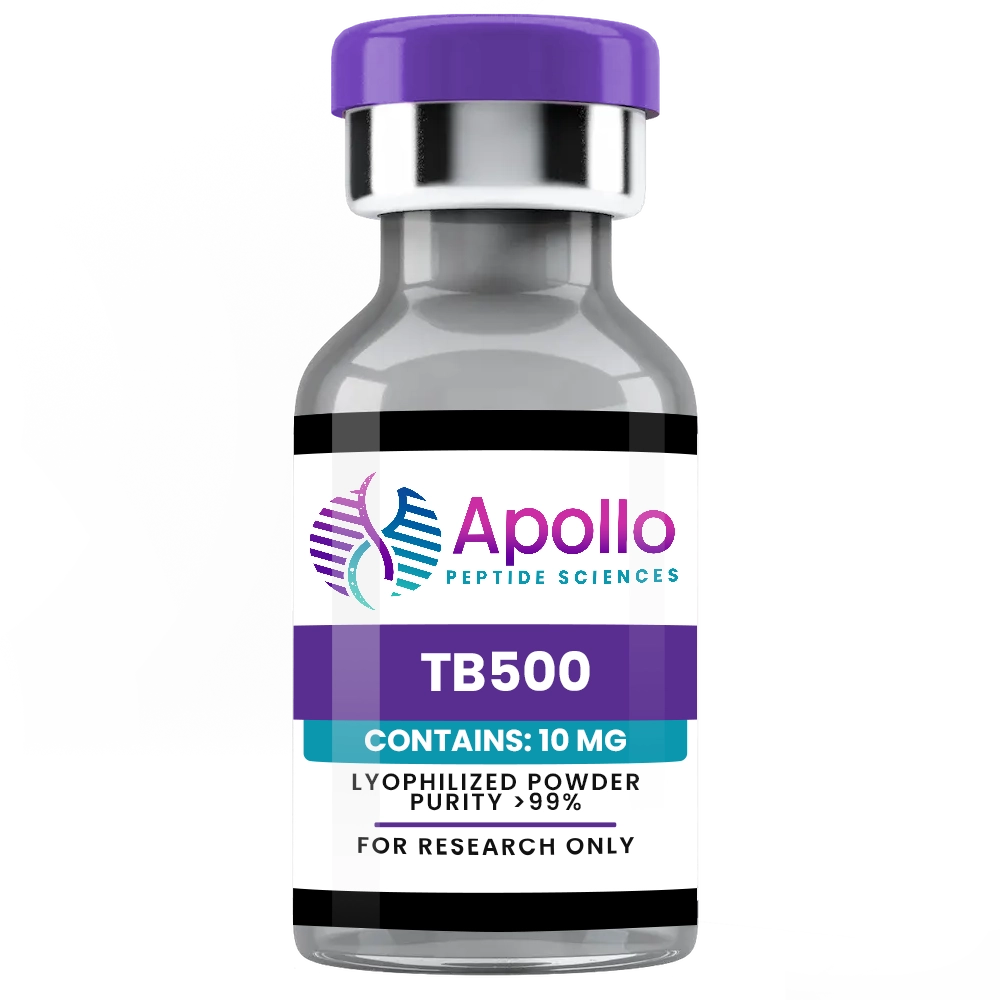
A thymosin beta-4 derived peptide studied for cellular migration, tissue repair, and recovery signaling.
- · Investigated for cellular migration and tissue repair
- · Studied for actin binding and cytoskeletal remodeling
- · Researched in muscle and soft tissue recovery models
Heads up: we may earn a commission when you order through our partner laboratory links, at no extra cost to you. It is what keeps our research writing free.