August 14, 2026 · 7 min read
Waking Up at 4 AM Every Night and What I Found When I Went Looking
Six months of foggy mornings sent me reading about how our cells make energy. Here is what I actually understood, in normal words.

Last winter I woke up at four in the morning almost every night with a head full of cotton. Coffee quit working sometime in January. One Tuesday I sat at my kitchen table and typed why am I always tired into a search bar, and that is how I ended up reading about a molecule I still cannot pronounce out loud.
NAD+ is the short version. It is something your cells already make and use, and it is part of how your body turns food into energy. I read that levels of it drop as we get older, and I read a lot of studies where researchers raised those levels in lab models and watched what changed. I am not a scientist. I am a project manager who reads too much at night. But that idea is easy enough to follow.
The part that really caught me was how old this research is. People have been studying it for decades. It is not some new internet discovery. It shows up in energy research, in aging research, and in a lot of places in between.
I spent three weekends reading lab test reports from different suppliers because I wanted to know what a purity number actually means. It means somebody measured it. It is not a slogan. Once I understood that, the whole thing felt a lot less mysterious.
None of this is medical advice and I never treated it that way. What I found was a thread worth following. The four in the morning wake up still happens some mornings. The reading list is just a lot more interesting now.
Small print: everything above describes laboratory research, not medical advice. These compounds are supplied strictly for research use and are not for human consumption, diagnosis, or treatment.
The subject of this study
NAD+ 500mg
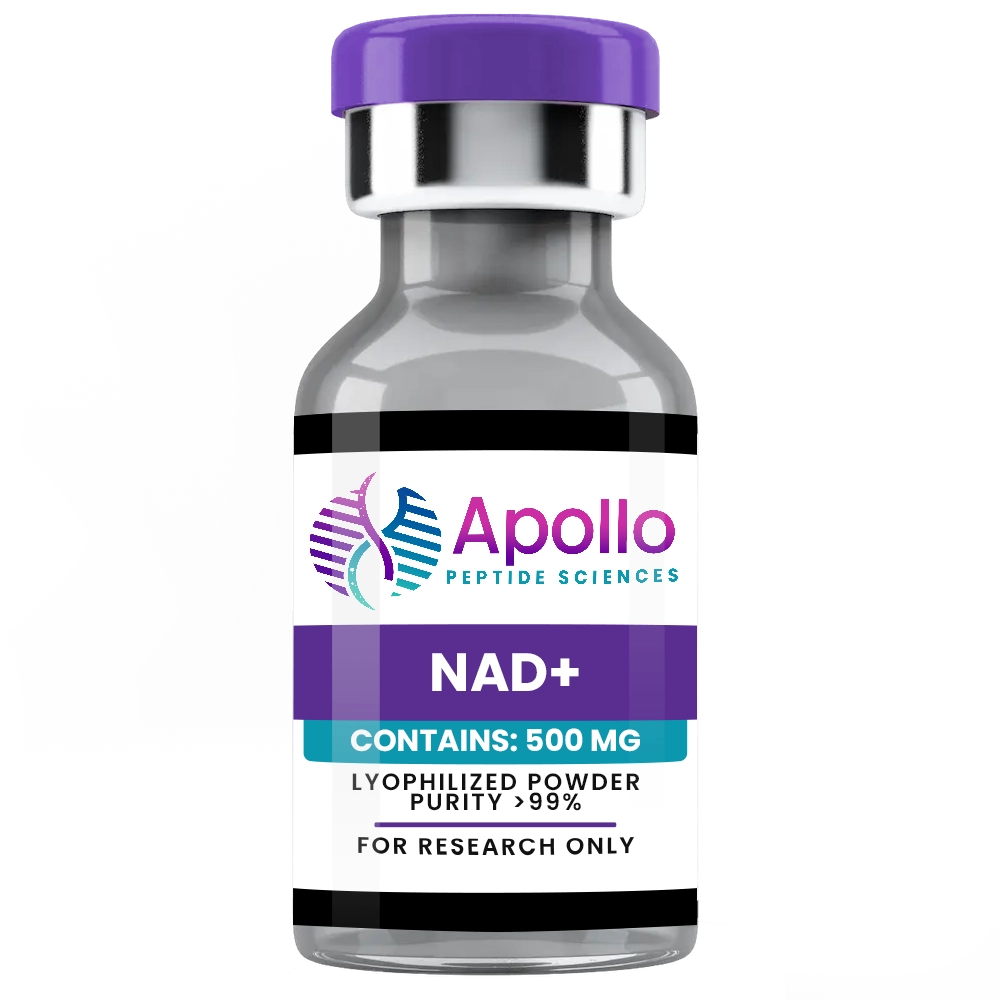
A coenzyme studied for cellular energy metabolism, sirtuin activity, and mitochondrial function in aging research.
- · Investigated for sirtuin and cellular energy pathways
- · Studied for mitochondrial function in aging models
- · Researched in cellular metabolism and repair studies
Heads up: we may earn a commission when you order through our partner laboratory links, at no extra cost to you. It is what keeps our research writing free.