September 22, 2025 · 7 min read
I Thought I Understood Growth Factors. I Did Not.
One line in a study showed me how much I had been simplifying. Here is the plain version of what I learned.

I had a vague idea that a certain growth factor was connected to muscle. That was the full depth of my knowledge before I started reading. It did not take long to realize how much I was missing.
The version I read about is a tweaked copy of the natural one. The tweaks change how long it hangs around in the body and how snugly it fits its docking point. Researchers study what happens further down the line in muscle tissue when it does.
The part that was new to me is that muscle has its own little pool of repair cells sitting around waiting. The research looks at what wakes them up. That connected a molecule I had barely heard of to a process I actually understand now.
I also read about the difference between the natural version and the tweaked one. It is not about which is stronger. It is about how long each one lasts and how it interacts with the docking point. That distinction matters a lot when you are designing a study.
I am not a researcher and I do not use these compounds. What I gained is a clearer mental picture of how muscle responds to signals, which beats the vague idea I started with.
Small print: everything above describes laboratory research, not medical advice. These compounds are supplied strictly for research use and are not for human consumption, diagnosis, or treatment.
The subject of this study
IGF-1 LR3 1mg
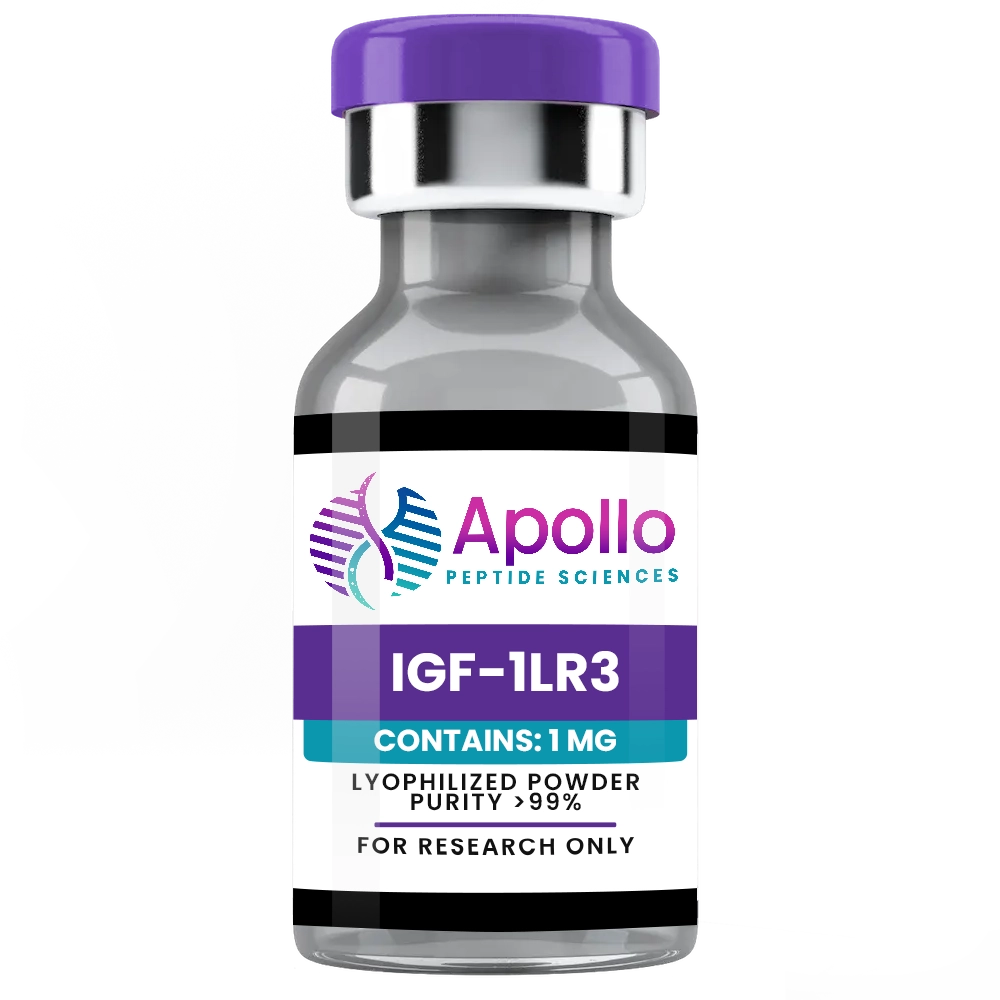
A modified insulin-like growth factor analog studied for muscle protein synthesis and recovery signaling.
- · Investigated for muscle protein synthesis pathways
- · Studied for satellite cell activation
- · Researched in body composition and recovery models
Heads up: we may earn a commission when you order through our partner laboratory links, at no extra cost to you. It is what keeps our research writing free.